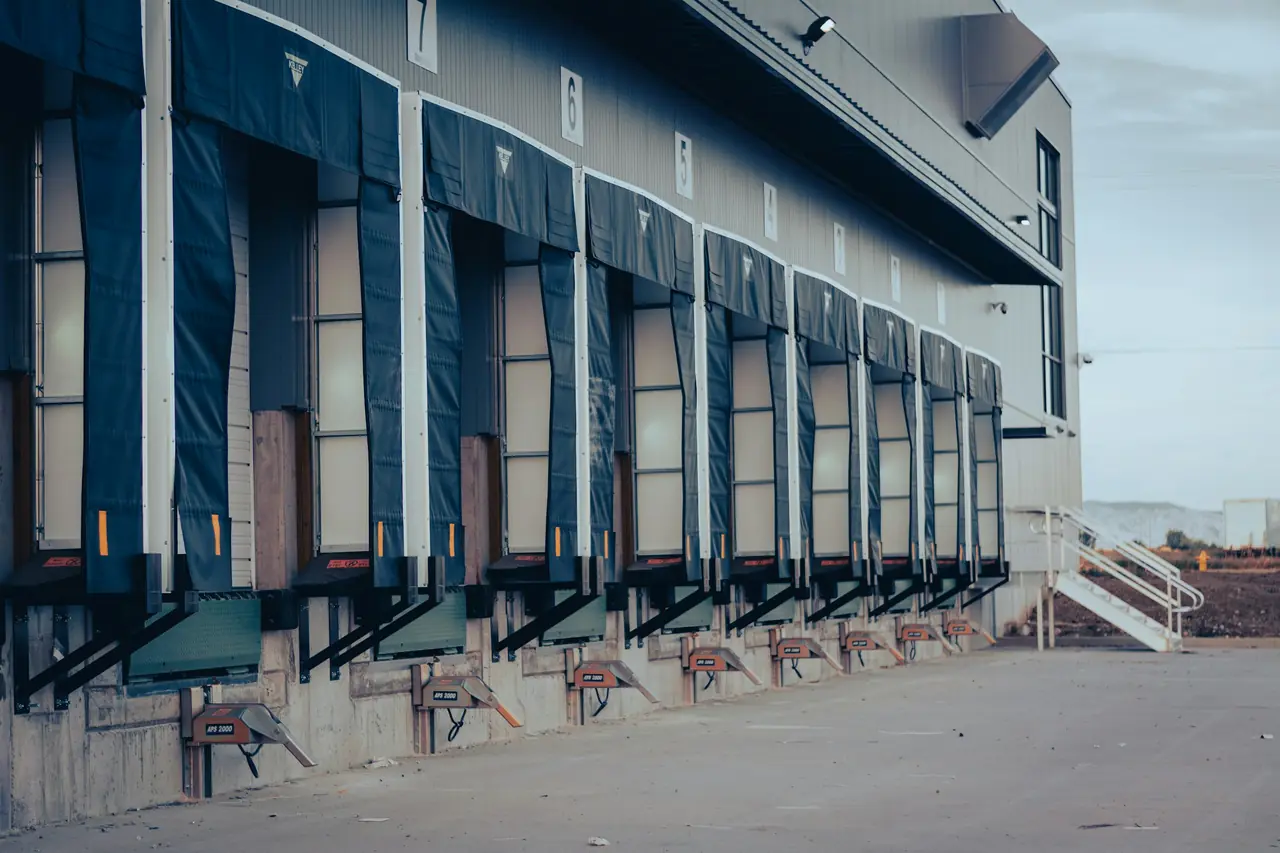
What a drop trailer program is
A drop trailer program parks empty trailers at your facility so your team can load them whenever it suits your shift, and a driver later hooks the loaded trailer and leaves. Nobody waits. The driver's time on your property drops from the hours a live load takes to the few minutes needed to swap trailers, check the seal and sign the paperwork.
The industry name for the swap is drop and hook. A driver arrives pulling an empty, drops it in a door or the yard, hooks the trailer you loaded, and goes. The same idea works at the other end: a loaded trailer can be dropped at the receiver, unloaded on the receiver's schedule, and picked up empty later. A set of trailers dedicated to one facility is called a trailer pool. The pool is sized so there is always an empty ready when your team starts loading and always a loaded trailer ready when the next truck arrives.
Who drop trailer service fits
Drop trailer service fits shippers with steady outbound volume from the same dock, usually a few loads a week or more. The program depends on rhythm. If loads leave every day or most days, a trailer pool keeps turning and every trailer earns its place. If loads leave twice a month, an empty trailer sits idle most of the time and live loading is cheaper.
Distribution centers for retail and consumer goods are the classic fit: steady store replenishment, loaded in waves, often overnight. Food and beverage plants that run production around the clock fit too, because they can load finished goods as they come off the line instead of staging them for a truck appointment. Manufacturers with daily outbound to the same customers use drops to stop the dock from becoming a parking lot. The common thread is a loading team that works better on its own schedule than on a driver's arrival time, and enough volume to keep trailers moving.
Drop and hook vs live load
The choice between a drop trailer and a live load comes down to volume, dock space and who controls the schedule. The table compares them on the points that affect cost and reliability. Neither is better everywhere; they solve different problems.
| Point | Live load | Drop trailer |
|---|---|---|
| Who waits | Truck and driver wait at your dock | Nobody; trailer waits instead |
| Loading schedule | Set by truck appointment | Set by your team |
| Detention exposure | High if loading runs long | Low, driver time on site is short |
| Yard space needed | One door per truck | Room to park the pool |
| Best volume | Occasional or irregular | Steady, a few loads a week or more |
| Paperwork | Standard rate confirmation | Plus a trailer interchange agreement |
A live load is simpler to set up and needs no yard space. A drop program takes setup and an agreement covering the trailers, then pays back in faster turns and fewer detention bills.
Many shippers run both. Steady lanes go on drops, while one-off loads, oversized pieces and new customers stay live. Start with your busiest lane, prove the pool size there, and add lanes once the trailer count and release routine work without daily phone calls.
Why waiting time costs driving hours
A driver waiting at your dock is using up legal driving time, which is why carriers price detention and prefer drops. Under the FMCSA hours of service rules (opens in a new tab), a property-carrying driver may drive up to 11 hours after 10 off, but may not drive past the 14th consecutive hour after coming on duty, and off-duty time does not extend that window.
Do the arithmetic for a live load. A driver comes on duty at 6:00 a.m. and arrives at your dock at 8:00 a.m. after two hours of driving. Loading runs until 1:00 p.m. That is five hours gone from the 14-hour window, leaving 14 minus 2 minus 5 = 7 hours of clock and room for at most 7 more hours of driving, not the 9 remaining on the 11-hour limit. At a planning average of 50 mph, that is about 100 miles of lost range. With a drop, the same driver hooks in minutes and keeps the full day for the road.
Detention and how drops avoid it
Detention is the charge a carrier bills when its truck is held at a shipper or receiver beyond the free time agreed on the rate confirmation. It compensates the carrier for the hours its driver and tractor could not work, and it is one of the most common surprise charges on a freight bill.
A drop program attacks detention at its cause. When the trailer is waiting instead of the truck, the driver's time on site is the swap: find the trailer, inspect it, hook it, check the seal against the bill of lading, and leave. There is nothing to hold. The same holds at delivery if the receiver accepts drops, since the driver leaves a loaded trailer and pulls an empty without waiting for unloading. Drops also help carriers plan. A driver who knows the swap takes minutes can schedule the next load the same day, so carriers often prefer drop facilities when they choose which freight to haul. That preference shows up as more reliable coverage on your lanes.
Equipment and legal limits for drops
Drop programs mostly run on 53 ft dry vans and reefers, the trailers that are easiest to stage at a dock and swap without special handling. Typical figures for the two:
| Trailer | Typical inside size | Typical payload | Notes |
|---|---|---|---|
| 53 ft dry van | About 52 ft 6 in x 8 ft 2 in x 9 ft; 26 pallets straight, 30 turned | 42,000 to 45,000 lb | Standard for drop pools |
| 53 ft reefer | Up to 26 pallets; about -20 F to 70 F | 42,000 to 44,000 lb | Unit must run and be fueled while staged |
Because your team loads without a driver present, your team also controls weight. The federal gross limit on the Interstate system is 80,000 lb (opens in a new tab), with 34,000 lb per tandem axle, and width is limited to 102 in under FHWA rules (opens in a new tab). Spread heavy product evenly along the trailer floor, not stacked at the nose, so neither axle group runs over. For reefer drops, the FSMA rule (opens in a new tab) makes the loader confirm the trailer is pre-cooled before loading, unless that duty is handed to the carrier in writing. The trailer guide lists other trailer sizes.
Freight that suits drop trailers
The freight that works best in drop programs is palletized, regular and loaded by your own team on predictable shifts. Store replenishment from a distribution center is the clearest example: the same stores, the same product families, loaded in waves through the night. Finished goods leaving a plant at the end of each production run fit just as well, because the trailer can be loaded straight off the line.
Floor-loaded freight, such as cartons stacked by hand, is a strong candidate too. Floor loading is slow, and doing it while a driver waits is the fastest way to rack up detention. Preloads, where your team loads tonight for a pickup early tomorrow, let you ship first thing without starting the dock at dawn. Weekend loading works the same way: load Saturday, pickup Monday. Freight that suits drops less includes one-off oversized pieces, loads that need special securement a driver should supervise, and anything on open equipment such as a flatbed, where tarping and strapping are the driver's job.
How a drop trailer program runs
A drop program follows a cycle that repeats as long as the freight keeps moving. Setup happens once; the daily cycle runs after that.
- You share your weekly outbound by lane, loading hours, dock doors and yard space.
- The pool size is set to your volume, enough empties to never stall your loaders, without extra trailers parked unused.
- The trailer interchange agreement is signed, covering liability, inspection and dwell time.
- Empties are dropped at your facility, inspected and logged.
- Your team loads on its own schedule, seals the trailer and records the seal number on the bill of lading.
- You release the trailer as ready, and a driver is dispatched to hook it.
- The driver drops a fresh empty, hooks the loaded trailer and leaves.
- Yard checks confirm how many empties and loaded trailers are on site.
The step that makes or breaks the program is step 6. A loaded trailer that nobody knows is ready just becomes a parked trailer.
What drives drop trailer pricing
Drop trailer pricing reflects the line haul for each load plus the cost of keeping trailers on your property. The line haul part follows the usual truckload factors: distance, direction, equipment and how easily the carrier finds freight out of your destination.
The trailer part is new. A trailer parked at your dock cannot haul anyone else's freight, so the size of the pool and how fast it turns matter most. A pool that turns quickly costs the carrier little; trailers that sit for days cost it a working asset. Many programs set a free dwell period and charge for longer stays. Reefer pools add fuel for units that run while staged. Yard logistics matter as well: a facility that releases trailers promptly and keeps empties accessible lets drivers swap in minutes, which carriers value. Consistency helps most of all. Steady weekly volume on the same lanes lets one carrier plan its trucks around your facility, which often prices better than irregular loads. For long-term lanes, combining drops with dedicated lanes pricing is common.
What to send to set up a drop program
A drop program is sized from your numbers, so the more precise the starting information, the better the pool fits. Send these and the program can be planned around how you actually ship.
- Facility address, loading hours and the days you load, including weekends.
- Outbound loads per week, by lane, and how steady that number is.
- Equipment: 53 ft dry van or reefer, and the set point for reefer loads.
- Number of dock doors available and yard space for parked trailers.
- Typical loading time per trailer, floor-loaded or palletized.
- Whether receivers accept drops or require live unloads.
- Yard rules: check-in, seal policy, gate hours and who releases trailers.
- Seasonal peaks or slow periods that would change the pool size.
If you also own or lease trailers and only need a tractor and driver to move them, power only service pairs with the same program. The trailer stays yours; the carrier provides the truck.
How Powerhaul runs drop trailer programs
We set the pool size to your volume, so trailers are parked at your dock and loaded when you are ready. Drop programs make the most sense with a few loads a week from the same dock; tell us your outbound and we will size it. The goal is fewer detention charges, faster turns and a dock that is not waiting on trucks.
We run drops with 53 ft vans and reefers. The program covers trailer pools, preloads, weekend loading and drops at both shippers and receivers. Yard checks keep the count of empties and loaded trailers straight. Drop trailer programs pair with power only when you have your own trailers. One person stays on your program and on every load that comes out of it. Every carrier is checked against FMCSA records before it is booked, and the rate comes from a person who has looked at your volume and lanes, not from a formula. For reefer pools, the set point is confirmed before the wheels turn.
Common drop trailer problems and fixes
Most drop program trouble comes from the trailer count drifting away from the loading pace. Too few empties and your loaders stand around; too many and trailers sit idle, which carriers charge for. Fix it with regular yard checks and a pool size reviewed whenever your volume changes, including seasonal peaks.
The second problem is loaded trailers nobody released. If your team finishes a trailer at midnight but nobody tells dispatch, the trailer waits until morning and your delivery slips. Agree on one clear release step.
Third is trailer condition. Inspect each empty when it arrives for floor damage, holes in the roof and a clean interior, and note problems before loading, not after. Fourth is weight placement: without a driver watching, heavy product can end up at the nose and overload the steer or drive axles. Fifth is reefer fuel. A staged reefer that runs out of fuel overnight is a temperature failure waiting to happen, so check the unit before loading.