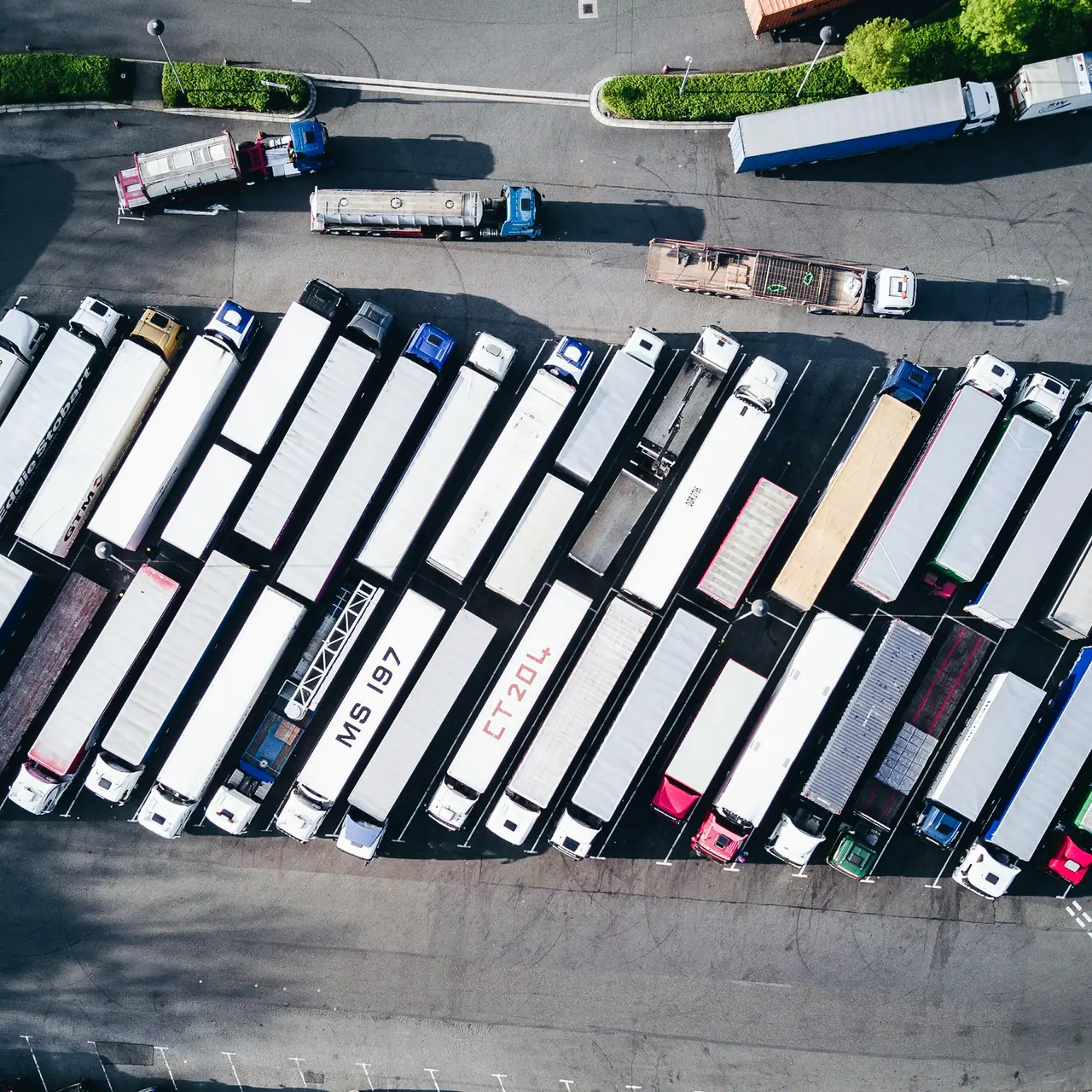
What automotive freight looks like on the road
Automotive freight is the flow of parts between suppliers and assembly plants, and almost all of it is scheduled. A typical load is a 53 ft dry van carrying seats from a supplier in Ohio to an assembly plant in Kentucky, wire harnesses and molded trim from a border warehouse in Laredo to a plant in Tennessee, or stamped body panels moving between plants in Michigan and Indiana. Engines, transmissions and axle assemblies ride in heavy steel racks. Smaller parts ride in plastic totes on pallets. Much of the packaging is returnable, so for every loaded run there is an empty run back to the supplier. Assembly plants hold only a short supply of most parts on site, and the line keeps moving whether the truck is there or not. That makes timing the defining feature of the industry. A late load of brake components can idle a plant faster than a damaged one, because a damaged pallet still leaves the rest of the load to build with.
Matching trailers to automotive freight
Most auto freight is dry van, but the urgency and the shape of the part change the setup.
| Freight | Trailer or service | Why |
|---|---|---|
| Scheduled production parts | 53 ft dry van | Enclosed, dock to dock, booked to the plant window |
| Late or at risk parts | Expedited team | Truck keeps moving while one driver sleeps |
| Tall dies, fixtures, prototype vehicles | Step deck | Lower deck typically takes freight about 10 ft tall |
| Daily runs between a supplier and a plant | Dedicated lane | Committed capacity and contract pricing |
| Empty racks and returnable bins | Dry van backhaul | Count checked, paperwork matched to the loaded run |
Typical figures: a 53 ft dry van carries 42,000 to 45,000 lb, and a step deck up to about 46,000 lb. Exact numbers depend on the carrier. Pick the equipment for the worst day on the lane, not the average one, because a plant window does not move for traffic.
Just in time plant deliveries
Just in time delivery means a part arrives at the plant close to when the line needs it, not days ahead in a warehouse. Plants schedule inbound trucks to narrow receiving windows, often by the hour, and each window is tied to the production sequence. Some parts, such as seats and instrument panels, arrive in the exact order the vehicles come down the line, which is called sequenced delivery. If the truck is late, there is no stack of spare seats to pull from. The supplier is responsible for getting parts to the dock under its supply agreement, and missing a window can mean premium freight costs, penalties, or in the worst case paying for a stopped line. That is why automotive carriers plan with buffer: they leave early, they know where the plant's staging yard is, and they call the moment something slips. A carrier who treats a plant window like an ordinary appointment does not last long in this freight.
Parts racks and returnable containers
Returnable containers are the reusable racks, bins and dunnage that carry parts to the plant and then go back empty for refilling. A steel rack built to hold a specific door panel or bumper fascia is expensive, and suppliers and automakers track them by count. If racks do not come back, the supplier runs short of packaging and cannot ship parts, even with parts on the floor. So the empty return is a real load with its own needs. Count the racks at loading and on delivery, and write the count and the container numbers on the bill of lading. Folded or nested racks can fill a trailer quickly, while some solid racks take up the whole floor with little weight. The return trip often works as a backhaul for the carrier who brought the loaded run, which keeps both legs efficient. Racks that are bent or damaged need to be noted before they leave the plant, or the supplier ends up paying for them.
Plant dock rules and driver check in
Assembly plants run their docks like the rest of the plant: to a schedule and with strict safety rules. A driver arriving at a plant usually checks in at a gate or a staging yard, gets assigned a dock, and may be required to wear safety gear such as a high visibility vest, safety glasses and steel toe boots. Many plants control where a driver can walk and when the trailer can be opened. Some run drop and hook, where the driver leaves a loaded trailer in the yard and a yard truck moves it to the dock when the line is ready. Others live unload at a specific door by the hour. Wrong paperwork, a missing shipment number or an expired gate pass can stop a truck at the gate, and that costs time against a window that does not move. Drivers who regularly haul into plants know these routines. Give the carrier the plant's receiving instructions in writing before dispatch, including the gate, hours and contact.
Expedited and team runs
When a production part is late, the cost is measured against a stopped line, and expedited freight is the answer. A team puts two drivers in one truck: one drives while the other rests in the sleeper berth, so the truck keeps rolling. Under the FMCSA hours of service rules (opens in a new tab), a single driver can drive 11 hours after 10 consecutive hours off and needs a 30 minute break after 8 hours of driving. A solo driver covers about 550 road miles a day by our planning rule of thumb. A team covers about 1,000. Take a load of transmission components from Chicago to a plant near Atlanta, about 715 to 730 road miles: about two days solo and one day by team, as the Chicago to Atlanta lane guide explains. Expedited runs go direct with no other stops, and sometimes a cargo van or straight truck makes more sense for a few boxes than a full trailer.
Cross dock moves for auto parts
A cross dock receives parts from many suppliers, sorts them, and reloads them onto trucks bound for the plant, usually with little or no storage in between. Automakers and their logistics providers use cross docks near plants to combine small shipments from many suppliers into full trailers timed to the receiving schedule. For a supplier, that means the delivery window may be at the cross dock, not the plant, and the window is just as tight because the outbound truck leaves on schedule with or without your freight. Milk runs feed many cross docks: one truck picks up from several suppliers on a fixed route, then delivers to the cross dock or the plant. Each pickup has a time and a count, and a late supplier makes every stop after it late. If your freight goes through a cross dock, ask for its exact receiving cut off, labeling rules and paperwork format. They often differ from the plant's own rules.
Vehicles on step deck and 393.128
Finished vehicles, prototypes and test vehicles sometimes move on a step deck rather than a car hauler, especially single units, oversized test trucks or vehicles that must not be seen on an open multi car rack. Federal rules set how they are tied down. 49 CFR 393.128 (opens in a new tab) covers automobiles, light trucks and vans, and requires them to be restrained at both the front and rear against forward, rearward, lateral and vertical movement. Heavier vehicles and machinery fall under 393.130 instead. All securement must also meet the general performance criteria in 393.102 (opens in a new tab): working load limits that withstand 0.435 g forward, 0.5 g rearward and 0.25 g lateral. A step deck's lower deck typically sits about 3 ft 6 in off the road and takes freight about 10 ft tall, which suits tall pickups and vans. Give the carrier the vehicle's dimensions, weight and whether it runs, because a non running vehicle needs a winch or forklift.
Heavy parts and weight limits
Some automotive freight is heavy for its size, and weight limits shape the load. Engine blocks, crankshafts, transmissions and axle assemblies in steel racks can bring a dry van to its typical payload of 42,000 to 45,000 lb while half the floor is still empty. The federal gross limit on the Interstate is 80,000 lb (opens in a new tab) for truck, trailer and freight together, with 34,000 lb on a tandem axle group and 20,000 lb on a single axle. A concentrated load bunched at one end can overload an axle group even when the total is legal, so heavy racks should be spread along the trailer. Inside a van, heavy racks also need blocking or load bars so they cannot slide forward under hard braking. The aggregate working load limit of tiedowns must be at least half the weight of the article, under 393.106 (opens in a new tab). A rack weighing 4,000 lb needs tiedowns rated for at least 2,000 lb combined.
How automotive loads go wrong
Automotive loads fail on time, count and paperwork more often than on damage. A truck leaves the supplier late because the order was not staged, then hits traffic near the plant and misses the window. A driver arrives at the wrong gate, or without the shipment number the plant needs, and loses an hour getting to the right dock. The bill of lading says 18 racks, the plant counts 17, and the shortage holds up the line until someone finds the missing rack at the supplier. Empty racks sit at the plant because nobody booked the return, and a week later the supplier cannot pack parts. A heavy rack slides forward in the van because it was not blocked, damaging the parts behind it. A solo driver gets assigned a run that only a team could make on time, and the gap is discovered at the first rest stop. Each of these is visible before the truck moves, which is where they are cheapest to fix.
How to protect the plant window
These steps prevent most late, short and refused automotive loads.
- Stage the order before the truck arrives, so loading starts on time.
- Give the carrier the plant gate, dock, hours and receiving contact in writing.
- Put the shipment number, rack count and container numbers on the bill of lading.
- Block or brace heavy racks so they cannot shift.
- Plan the route with buffer for traffic and check in time.
- Book the empty rack return at the same time as the loaded run.
- Choose a team when the window cannot be met by one driver's legal hours.
- Call the plant the moment a delay appears, not when the window passes.
Step 8 matters most. A plant that knows early can reshuffle its schedule or approve an expedited recovery. A plant that finds out at the window has no options left.
Dedicated lanes for production freight
Production freight repeats, and repeat freight is where dedicated lanes pay off. A supplier shipping seats to the same assembly plant every day, or running the same Detroit to Georgetown, Kentucky lane several times a week, gains from having the same carriers and drivers on it. Drivers who run a lane regularly know the plant's gate, dock and check in routine, which removes the most common causes of a missed window. A dedicated lane arrangement sets contract pricing and committed capacity, so the truck is there on the days you ship, including the weeks when spot capacity is tight. It also makes rack returns predictable, because the same carrier brings the loaded rack in and the empty one back. The trade off is commitment: a carrier holds capacity only for volume that is steady, so dedicated lanes suit regular production schedules rather than occasional shipments. Share your production forecast and model changeover plans early so capacity follows the schedule.
What to send for an automotive quote
A complete request gets a price and a truck that can make the window.
- Pickup and delivery addresses, with plant or cross dock name and dock number
- Pickup time and the delivery window, with the plant's time zone
- Part type, packaging (racks, totes, pallets) and count
- Total weight and the weight of the heaviest rack
- Whether the run is expedited and needs a team
- Shipment or release number the plant requires
- Empty rack return details, if the containers come back
- For vehicles: dimensions, weight and whether the vehicle runs
- Repeat schedule, if this is a daily or weekly lane
The delivery window and the heaviest rack weight are the two items most often left out. One sets the equipment and the driver plan, the other sets how the load is secured, and both decide whether the truck arrives on time and legal.
How Powerhaul handles automotive freight
We move parts, racks and finished components with carriers who know plant docks, and we keep teams ready for when timing gets tight. Plant dock delivery, returnable containers and cross dock moves are planned with the loaded run, not after it, and vehicles that need open deck go on a step deck sized to the unit. When a load is at risk, we put a team on it so the truck keeps moving. Every carrier is checked against FMCSA records before it hauls, and one person stays on every load from booking to delivery, so there is one name to call when a plant moves a window or a release changes. For freight that runs every week, dedicated lanes keep the same capacity on your schedule. Your rate comes from a person, not a formula. Send the lane, freight and date through the quote form, and we will come back with a price and a truck.