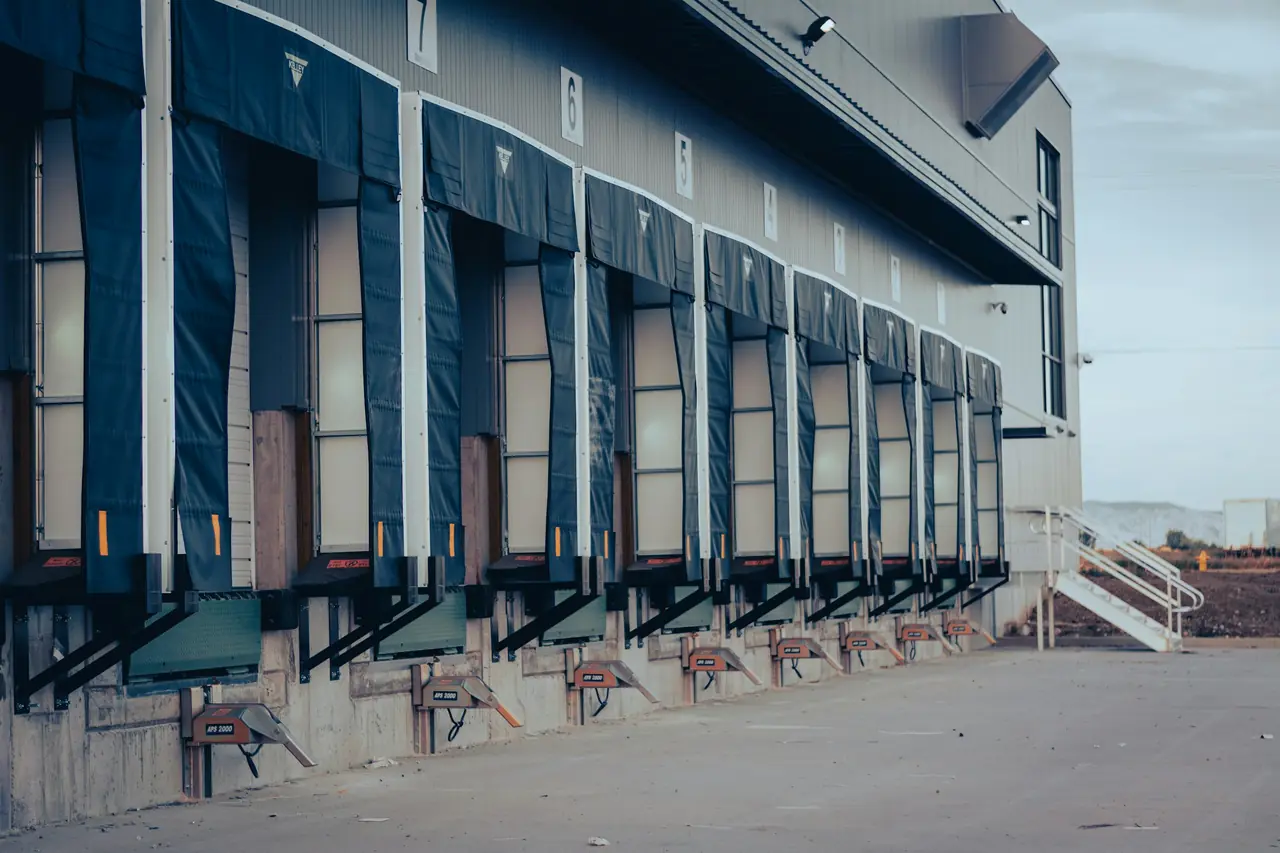
What manufacturing freight looks like
Manufacturing freight splits into three streams that need different trucks: raw materials and parts coming in, finished goods going out, and the machinery the plant runs on. Inbound loads include steel coil and bar for stamping, plastic resin pellets in gaylords for injection molders, castings and forgings, corrugated packaging, and subassemblies from a supplier plant. Outbound loads are the plant's product, usually palletized and shrink-wrapped: appliances, HVAC units, auto parts, packaged chemicals, furniture or electrical gear.
Most of this freight moves on a schedule set by the production plan, not by the shipper's convenience. A components plant outside Chicago that ships to an assembly plant near Atlanta runs the Chicago to Atlanta dry van lane, about 715 to 730 miles, two days for a solo driver at the 550 mile planning rule. A resin load from a Houston area producer to a molder in the Midwest moves on a similar weekly rhythm. The third stream, machinery, moves rarely but needs the most planning: a press, a CNC machine or a conveyor line on a step deck or an RGN.
Matching the truck to the load
Each manufacturing stream has its own best fit, and getting the match right decides the cost and the risk. Palletized parts and finished goods ride in a 53 ft dry van as full truckload. Plants with their own trailer pools use power only, where the carrier brings only the tractor and driver. Urgent freight goes expedited with a team, and machinery goes on open deck equipment.
The deciding questions are the same on every load: how the freight is packaged, how the dock loads it, how fast it has to arrive and how tall it stands. A plant that ships pallets of motors on Monday, a hot gaylord of resin on Wednesday and a used press on Friday may need three different trucks in one week, and the table below shows where each one usually lands.
| Load | Usual equipment | Why it fits |
|---|---|---|
| Palletized parts, finished goods | 53 ft dry van | 26 to 30 pallets, dock to dock (typical) |
| Preloaded plant trailers | Power only | Your trailer, our truck and driver |
| Line-down parts | Expedited team | About 1,000 miles a day (planning rule) |
| Machinery up to about 10 ft tall | Step deck | Lower deck about 3 ft 6 in (typical) |
| Taller or heavier machinery | RGN | Deck 18 to 24 in, front loads by ramp (typical) |
| Repeat weekly volume | Dedicated lanes | Committed capacity, contract pricing |
Inbound parts and raw materials
Inbound freight feeds the line, so its job is to arrive in the window the plant asked for, not just on the day. Many plants run lean on inventory and schedule receiving by the hour, and a load that arrives early may be turned away just as firmly as one that arrives late. The receiving schedule should be on the order, with the appointment confirmed before the truck is dispatched.
The commodity changes the details. Steel coil and bar ride on flatbeds with chains and coil racks, covered on the steel and metals page. Resin in gaylords is heavy and can be top-heavy, so the loads need to be braced or strapped inside the van. Castings and forgings are dense and small, which concentrates weight on the floor and calls for careful placement over the axles. Corrugated packaging is light and cubes out the van before it reaches any weight limit. A good inbound program also plans the empty, since a truck delivering to the plant in the morning can often reload its finished goods in the afternoon.
Outbound finished product
Outbound freight leaves the plant as palletized product bound for a distribution center, a retailer or a customer's plant, and the van's floor and payload set the limits. A typical 53 ft dry van is about 636 in long. With 48 x 40 in pallets loaded straight, 636 / 48 = 13 rows of two, or 26 pallets; turned, 636 / 40 = 15 rows of two, or 30 pallets. The 48 x 40 in pallet (opens in a new tab) is the most common US size, and the pallet planner runs the same math for other sizes.
Payload is the other ceiling, typically 42,000 to 45,000 lb in a dry van. Heavy product such as appliances, motors or drums of chemicals can reach that limit with floor space left over, so the plant should load by weight first and pallet count second. Finished goods also need protection a raw material does not: load locks or straps to stop shifting, corner protection on boxed product, and a clean, dry trailer that the receiver will not reject at the door.
Hot loads when a line is about to stop
A hot load is the shipment a plant needs before a line stops, and it moves on speed rather than price. The fastest option over the road is usually an expedited team, two drivers who swap so the truck keeps moving within hours of service limits (opens in a new tab). One driver gets 11 hours of driving after 10 hours off, which works out to about 550 miles a day as a planning rule. A team covers about 1,000.
On the Chicago to Atlanta lane, that is the difference between two days solo and one day with a team. For shorter runs, a dedicated solo truck that leaves the moment the freight is ready often beats a team that has to reposition. The order for a hot load needs the exact part, the piece count and weight, the dock and contact at both ends, and a phone number that answers overnight. Hot loads are also the best argument for planning: a plant that ships the same parts every week on a dedicated lane has fewer emergencies to pay for.
Machinery under 393.130
Heavy machinery has its own federal securement section, 49 CFR 393.130 (opens in a new tab), covering heavy vehicles, equipment and machinery. It requires the machine to be restrained against movement forward, rearward, sideways and up, with tiedowns attached at the front and the rear. Accessory parts such as booms, arms, blades and buckets must be lowered and secured, and articulated equipment must be locked so it cannot pivot on the deck.
The general rules still apply alongside it. Under 49 CFR 393.106 (opens in a new tab), the working load limits of all tiedowns must add up to at least half the machine's weight, so a 30,000 lb press needs at least 15,000 lb of combined working load limit. Machines without designed tiedown points need a rigging plan before the truck arrives, and many need to be skidded or bolted to timbers so the chains have something solid to pull against. Remove loose parts, drain fluids where required, and send the manufacturer's lifting and tiedown points with the order.
Step deck, RGN and height math
The trailer for a machine is chosen by the machine's height first, because legal height is set by states and FHWA puts the typical range at 13.6 to 14.6 ft (opens in a new tab). Adding deck height to freight height shows what fits without a permit.
| Trailer | Deck height (typical) | Freight height | Overall |
|---|---|---|---|
| Flatbed | About 5 ft | About 8 ft 6 in | About 13 ft 6 in |
| Step deck | About 3 ft 6 in | About 10 ft | About 13 ft 6 in |
| RGN | 18 to 24 in | About 11 ft 6 in to 12 ft | About 13 ft 6 in |
The arithmetic is simple and worth doing before booking: 5 + 8.5 = 13.5 ft, 3.5 + 10 = 13.5 ft, and on an RGN with a 2 ft deck, 13.5 minus 2 leaves about 11.5 ft for the machine. An RGN's front gooseneck detaches so the machine can roll or be dragged on from the front, which suits equipment that cannot be lifted by a crane. Its well is typically 24 to 29 ft long, and it carries about 40,000 lb legal, more with permits.
Oversize permits for machinery
A machine that is too wide, too tall or too heavy to ship legally needs a permit from every state on the route, because the federal government issues none (opens in a new tab). States permit only nondivisible loads, meaning the machine would take more than 8 work hours to dismantle, or dismantling would defeat its purpose. A machine that can come apart in an afternoon is expected to ship in pieces at legal size.
The legal limits come from two places. Width on the National Network is 102 in, and no state may impose more or less. Weight on the Interstate is set by 23 CFR 658.17 (opens in a new tab) at 80,000 lb gross, 34,000 lb per tandem and 20,000 lb per single axle, with the bridge formula able to lower it. Each state adds its own travel times, route restrictions and escort rules, so a permit load from Ohio to Texas meets a different set of conditions at every state line. Permits take time to issue, so build the lead time into the move date rather than finding it the week of shipment.
Plant schedules, power only and drop trailers
Plants run on schedules that do not bend, and the trucking has to fit them rather than the other way round. Two programs help most. With power only, the plant keeps its own trailers, loads them on its own time, and a carrier's tractor and driver pull them away. With a drop trailer program, a carrier leaves empty trailers at the plant, the crew loads them across the shift, and the truck swaps a loaded trailer for an empty one.
Both remove the hours a driver would otherwise sit at a dock while product comes off the line. That matters because a driver gets 11 hours of driving inside a 14-hour window, and every hour of waiting comes out of the same window: two hours at a dock leaves 14 minus 2 = 12 hours for the rest of the day. Plants with steady volume between the same points can combine either program with dedicated capacity, so the same carriers learn the dock rules, the paperwork and the people.
Timing and seasonality
Manufacturing freight follows the production calendar more than the weather. Volume rises when a plant ramps a new product, when customers build inventory ahead of their own busy season, and at the end of a quarter when shipments are pushed out the door to close the books. It drops during planned shutdowns, retooling and model changeovers, when inbound parts stop and outbound product pauses for days or weeks.
Those shifts are predictable inside the plant even if they look sudden from outside, so the best time to plan trucking is when the production schedule is set. Tell your carrier or broker about a shutdown, a ramp or a quarter-end push weeks ahead, and the capacity can be lined up before the rush. Machinery moves often cluster around shutdowns too, because that is when lines get rebuilt and old equipment goes out. A plant that plans its rigging, permits and trailers alongside its shutdown schedule avoids paying for an urgent move later.
How manufacturing loads go wrong
Manufacturing loads fail at the handoffs between the plant, the carrier and the receiver. The common failures and their fixes are below.
- Missed receiving window. The truck is early or late and the plant refuses it. Prevent it with confirmed appointments and a driver who knows the window.
- Freight not ready. The truck waits while product comes off the line. Prevent it with power only or drop trailers.
- Shifted pallets. Product moves in the van. Prevent it with load locks, straps and stable pallets.
- Overweight axle. Dense parts sit too far forward. Prevent it with honest weights and a load plan.
- Machine taller than planned. The trailer cannot clear the legal height. Prevent it by measuring the machine as it will sit on the deck, including skids.
- No paperwork match. The bill of lading does not match the order. Prevent it by sending the PO and part numbers with the tender.
What to send for a quote
A manufacturing quote depends on which stream the freight belongs to, so start there and the rest follows. Send these details with the request.
- Pickup and delivery city and state, with plant or warehouse names and dock hours.
- Pickup date, delivery appointment, and whether the load is time critical.
- Commodity and packaging: pallets, gaylords, crates, or a machine on skids.
- Pallet count and size, or piece dimensions.
- Total weight, and the weight of the heaviest piece.
- For machinery: length, width, height as loaded, and lifting and tiedown points.
- Whether you have your own trailers for power only.
- Reference numbers the receiver needs on the paperwork.
For repeat freight, add the weekly or monthly volume, since that opens dedicated pricing. The quote form takes the lane, date, equipment, weight and commodity in one pass.
How Powerhaul handles manufacturing
We cover raw materials coming in, finished goods going out, and the hot loads in between when a line is about to stop. That covers dedicated 53 ft dry vans dock to dock, expedited team runs for time critical freight, power only where we bring the truck and the driver for your trailer, step decks for machinery moves that need extra height without going to a lowboy, and dedicated programs for repeat volume.
Every carrier is verified against FMCSA records, insured and approved by our compliance team before it sees a load. One person owns each load from booking to delivery, so the person who booked your inbound coil is the one who answers when the plant moves the appointment. Your rate comes from that person, not a formula, and it is built on your actual dock hours, weights and schedule. When the production plan changes, tell that same person once, and the trucks change with it.